1. ETBC: Coupling biogeochemical cycles and sediment fluxes in the intertidal zone: erosion, deposition and landform evolution
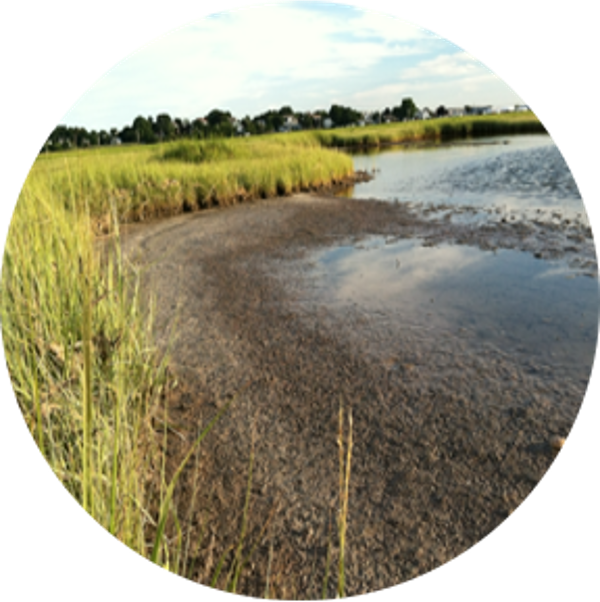
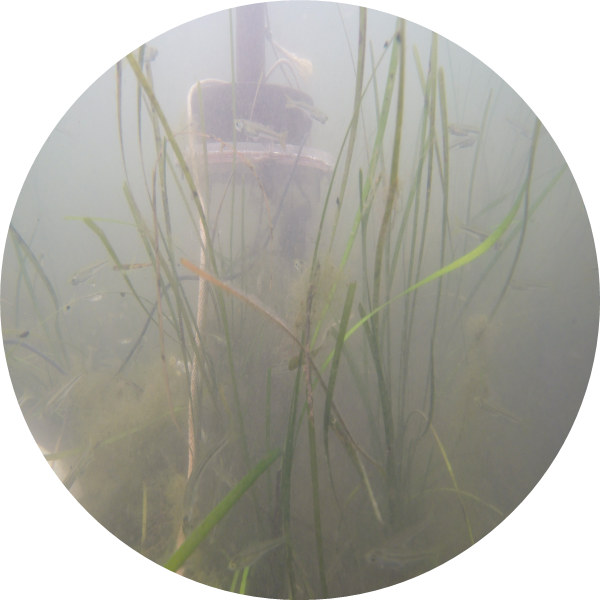
For over three decades, the impact of anthropogenic nutrient loading in coastal ecosystems has been a leading issue of concern for scientists, managers, and stakeholders. Nutrient enrichment leads to a variety of negative ecosystem consequences including increased intensity, duration, and frequency of phytoplankton blooms, hypoxic and anoxic events, increased macroalgae blooms, losses of fish and shellfish habitat, decreased benthic diversity, and loss of eelgrass beds. Much research has focused on the effects of excess nutrients on the water column and submerged aquatic vegetation. Remarkably, little work has been done in intertidal areas, and very few studies have addressed the effects of nutrient enrichment on the coastal landscape or how changes in biogeochemical cycles can modify the coastline by promoting erosion, accretion, and landform evolution. In addition, the interactions between fundamental nutrient cycling, vegetation, and coastal geomorphology have largely been overlooked. This project will study the feedbacks between tidal flats and salt marshes at the Plum Island LTER site in Cape Cod, Massachusetts. Using state of the art field and laboratory techniques we will determine the relationship between biogeochemistry and geomorphology. Specifically this study is designed to determine how nutrient enrichment alters sediment stability and ultimately the salt marsh and tidal flat landscape. We will also determine how excess nutrients modify the biogeochemical linkages between the salt marsh and tidal flat. Our quantitative investigation will be integrated into a coupled numerical model that will be used as a tool for investigations over longer-time scales and at different locations. Thus the results from this study are widely applicable to shallow coastal landscapes in the United States and abroad. Moreover, the analysis of the feedbacks between nutrients and mechanical characteristics of the sediments can be used as a template for similar studies in other marine environments across the entire continental shelf.
Funding Source: NSF
Collaborators: Sergio Fagherazzi, Duncan FitzGerald, Linda Deegan
Funding Source: NSF
Collaborators: Sergio Fagherazzi, Duncan FitzGerald, Linda Deegan
2. Collaborative Research: Using Biogeochemical and Genetic Tools to Unravel the Environmental Controls of Nitrogen Fixation and Denitrification in Heterotrophic Marine Sediment
Current estimates of marine denitrification (and related N2 producing processes such as anammox) suggest that oceanic nitrogen losses exceed known inputs due to N2 fixation, land runoff, and atmospheric deposition. Consequently, many recent oceanic fixed nitrogen (N) budgets are unbalanced with a substantial N deficit. This deficit is driven mainly by larger denitrification rates, as denitrification is thought to be the dominant process in the N cycle, while sediment N fixation is traditionally considered to be inconsequential.However recent findings suggest that N fixation plays a more important role in the N cycle in general and may provide the key to the balancing the oceanic N cycle in particular. Recent work has shown that N fixing organisms are more abundant and diverse in the open ocean water column than formerly thought, and may thus provide a significant source of N. Very recently, it has been shown that sediment N fixation is an important process in shallow coastal systems with rates equal to or greater than observed denitrification rates. Most importantly, for this proposal, were the recent measurements of N2 fluxes in a northern temperate estuary (Narragansett Bay, RI) which first exhibited a decrease in denitrification from historic rates during the summer of 2005 (Fulweiler and Nixon in press) and then high rates of net N2 fixation in summer 2006. This switch in the net sediment N2 flux represents a major alteration in the coastal marine N cycle that appears to be caused by changes in the quantity and/or quality of organic matter reaching the benthos. This proposal seeks funding to determine the extent of sediment N fixation and the environmental controls of the net N2 flux in marine sediments.
Funding Source: NSF
Collaborators: Anne Giblin, Scott Nixon, Bethany Jenkins
Funding Source: NSF
Collaborators: Anne Giblin, Scott Nixon, Bethany Jenkins
3. Assessing the Impact of Hypoxia/Anoxia on Sediment Denitrification and the Production of Nitrous Oxide in Waquoit Bay
N2O is an important greenhouse gas with a global warming potential per unit weight ~ 250 times greater than carbon dioxide. Approximately 4 Tg N2O y-1 or 25% of global N2O emissions is estimated to come from the oceans. Importantly, although estuaries and coastal seas account for less than 20% of the global ocean area they may be responsible for 50% of the total N2O flux. Denitrification, the microbial conversion of nitrate to N2, is an important N cycling process that can remove over 50% of anthropogenic N inputs to coastal systems. Denitrifying bacteria can both produce and consume nitrous oxide. The purpose of this research is to determine what environmental factors promote the production of nitrous oxide. Specifically we will be looking at the effects of low oxygen conditions.
Funding Source: WHOI Sea Grant
4. Evaluating Climate Change Impacts on Nitrogen Cycling Along a Gradient of Anthropogenic Impact – From Narragansett Bay to Rhode Island Sound and Block Island Sound

c/o R. Wilke
As explained above nitrous oxide is a powerful greenhouse gas that is produced in coastal systems. Field observations and experimental manipulations have highlighted the importance of organic matter
deposition to the sediments in regulating the net sediment N2 flux – i.e. the balance between denitrification and nitrogen fixation. Under fresh and frequent depositions of organic matter net denitrification dominates while nitrogen fixation appears to become an important process under oligotrophic conditions. The role of organic matter in regulating sediment N2O flux is unclear. Some experimental work on denitrifying bacteria has demonstrated that carbon limitation increases the rate of N2O production in denitrifying bacteria (Firestone et al.1980; Tiedje 1988). Alternatively, Seitzinger et al. (1984) reported higher N2O production ratesin organic rich sediments of Narragansett Bay.The purpose of this research is to determine how nitrous oxide production varies as a function of organic matter loading.
Funding Source: RI Sea Grant
deposition to the sediments in regulating the net sediment N2 flux – i.e. the balance between denitrification and nitrogen fixation. Under fresh and frequent depositions of organic matter net denitrification dominates while nitrogen fixation appears to become an important process under oligotrophic conditions. The role of organic matter in regulating sediment N2O flux is unclear. Some experimental work on denitrifying bacteria has demonstrated that carbon limitation increases the rate of N2O production in denitrifying bacteria (Firestone et al.1980; Tiedje 1988). Alternatively, Seitzinger et al. (1984) reported higher N2O production ratesin organic rich sediments of Narragansett Bay.The purpose of this research is to determine how nitrous oxide production varies as a function of organic matter loading.
Funding Source: RI Sea Grant